
“Watershed agents are helping me save about 12 weeks per year, which means I’ve now got time to work on decarbonization strategy and energy efficiency projects across our sites.”


Meet Watershed agents: cleaning, correcting, and analyzing so you can turn messy data into clear progress.
“Watershed agents are helping me save about 12 weeks per year, which means I’ve now got time to work on decarbonization strategy and energy efficiency projects across our sites.”


2 days
to finish their SB 261 report

6x faster
measurement with Watershed


3-5 hours
saved per week cleaning & transforming data


2 weeks
saved transforming data with agents
And free them from spreadsheets.
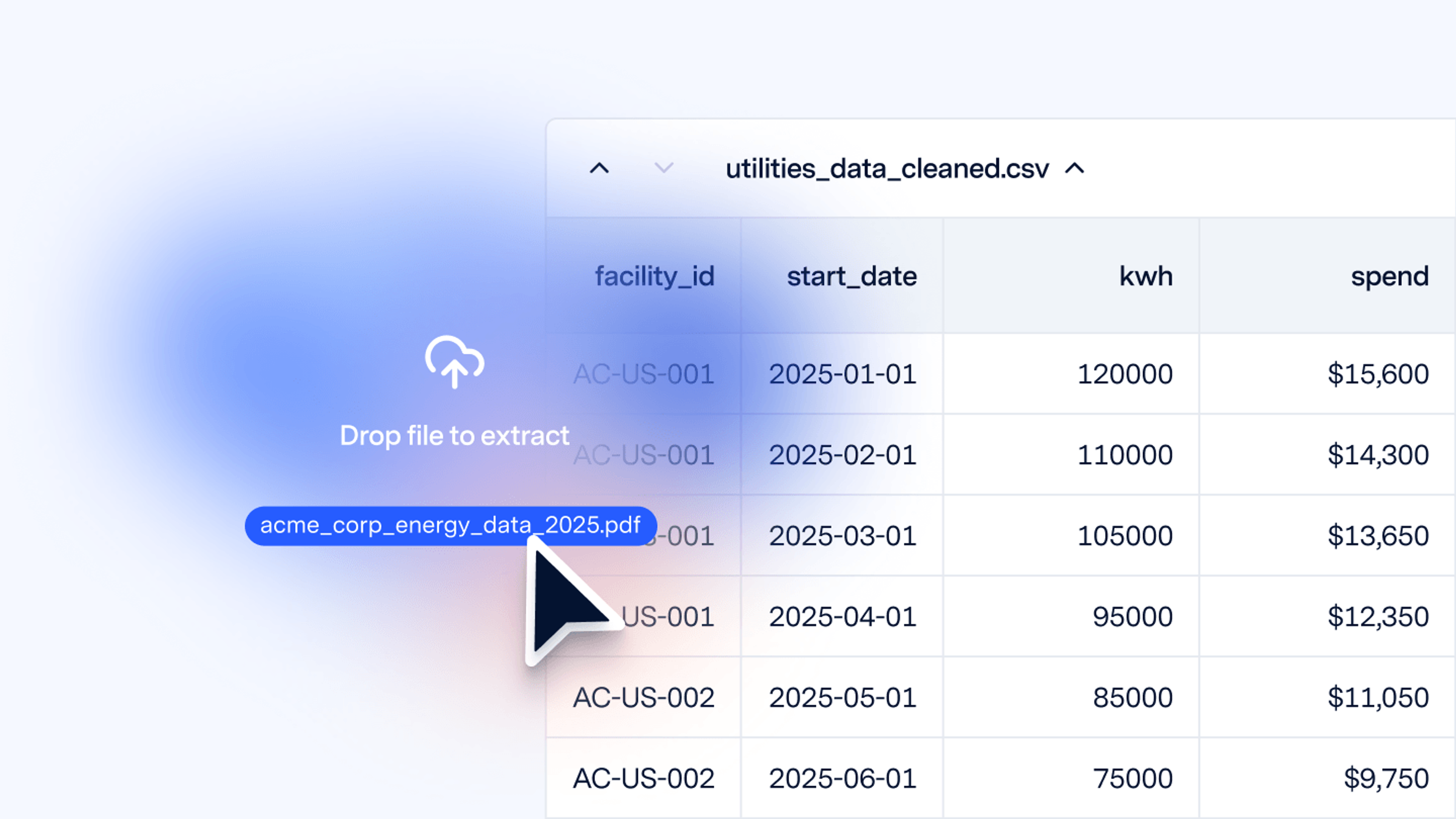
Go from paper or PDFs to structured data 7X faster with OCR and automatic anomaly detection.
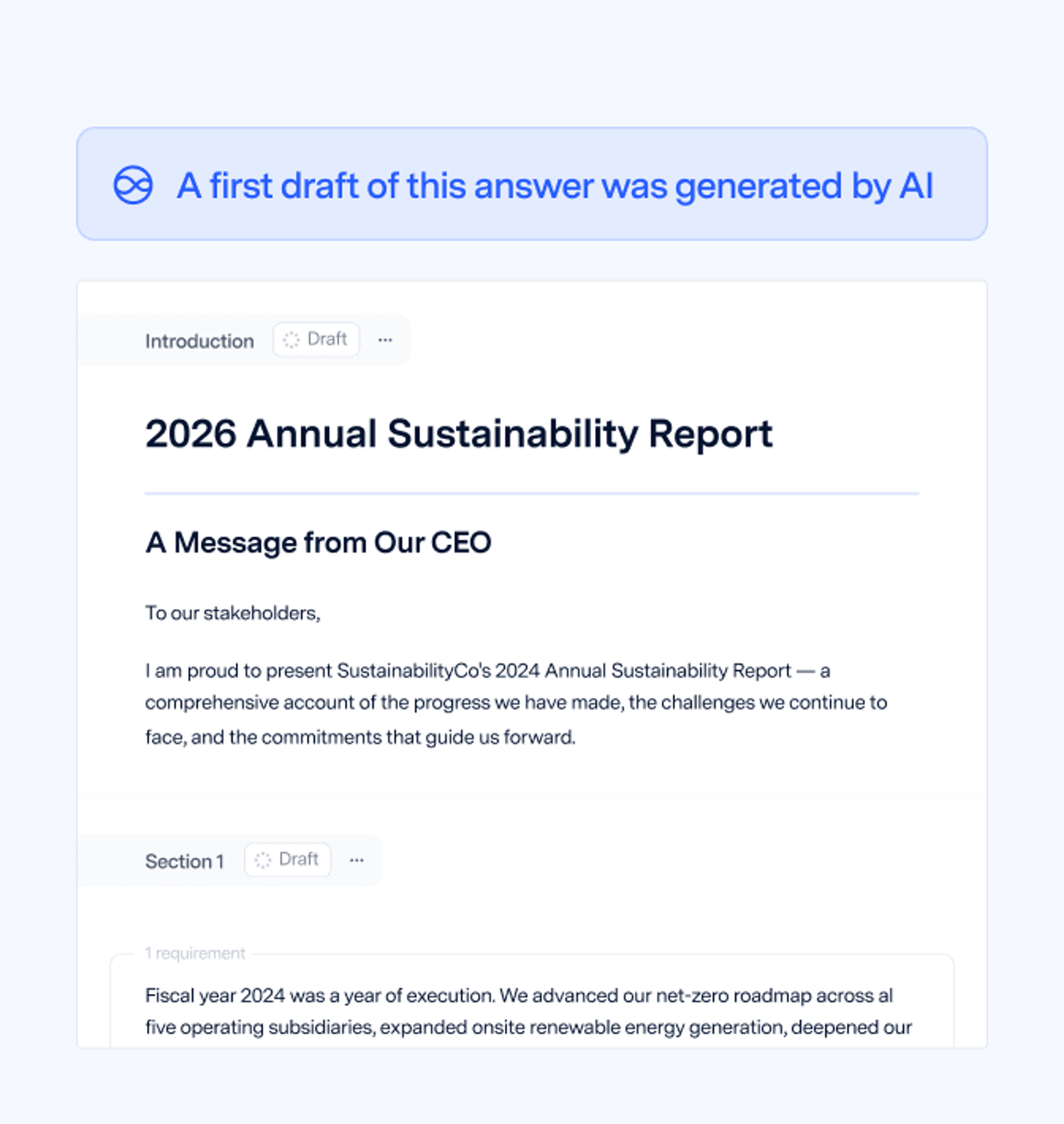
Agents draft reports in the right format, using metrics and answers based on your data, then track changes as you edit.
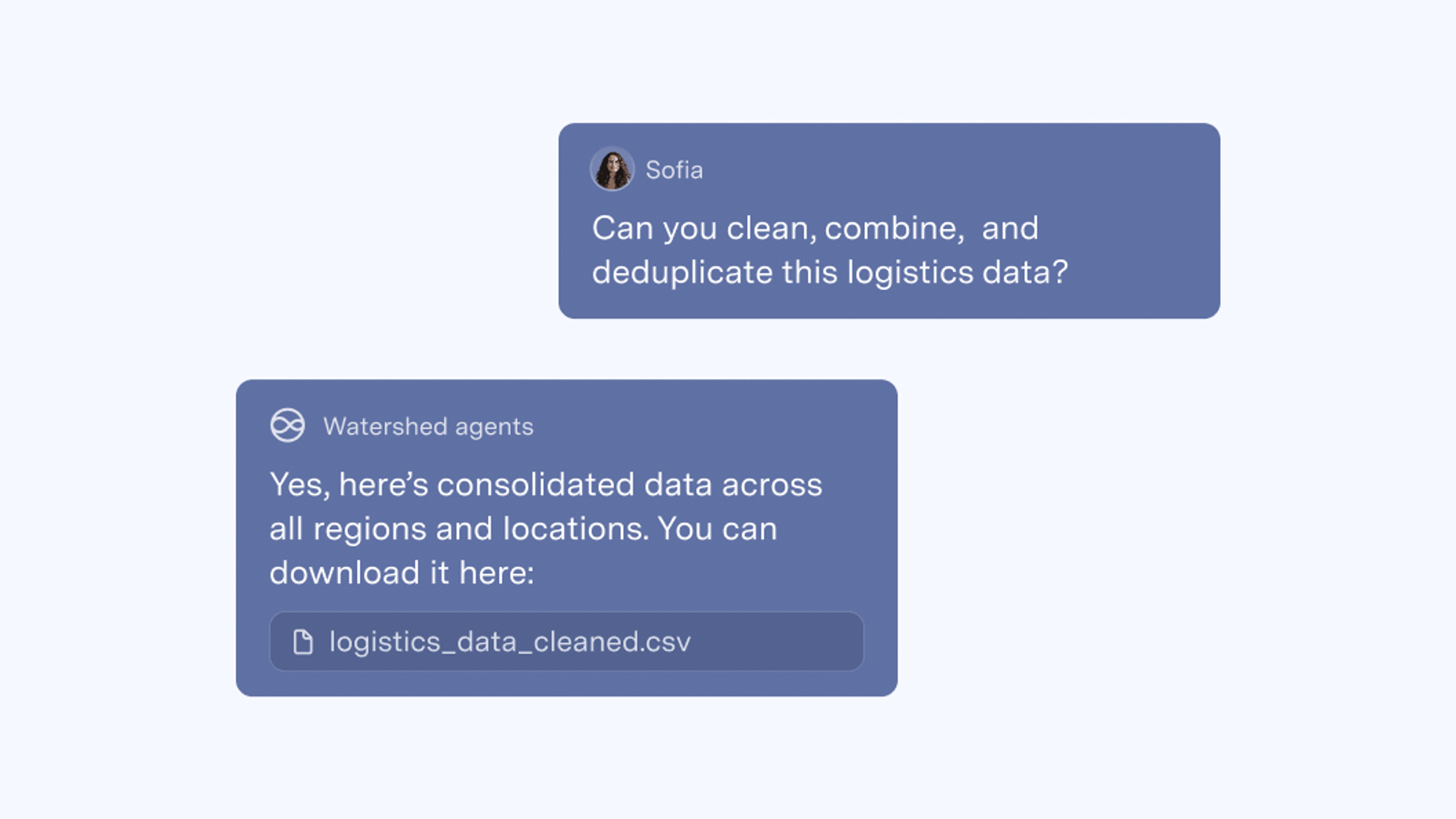
Turn messy data with different languages, units, and columns into clean, structured files in moments.
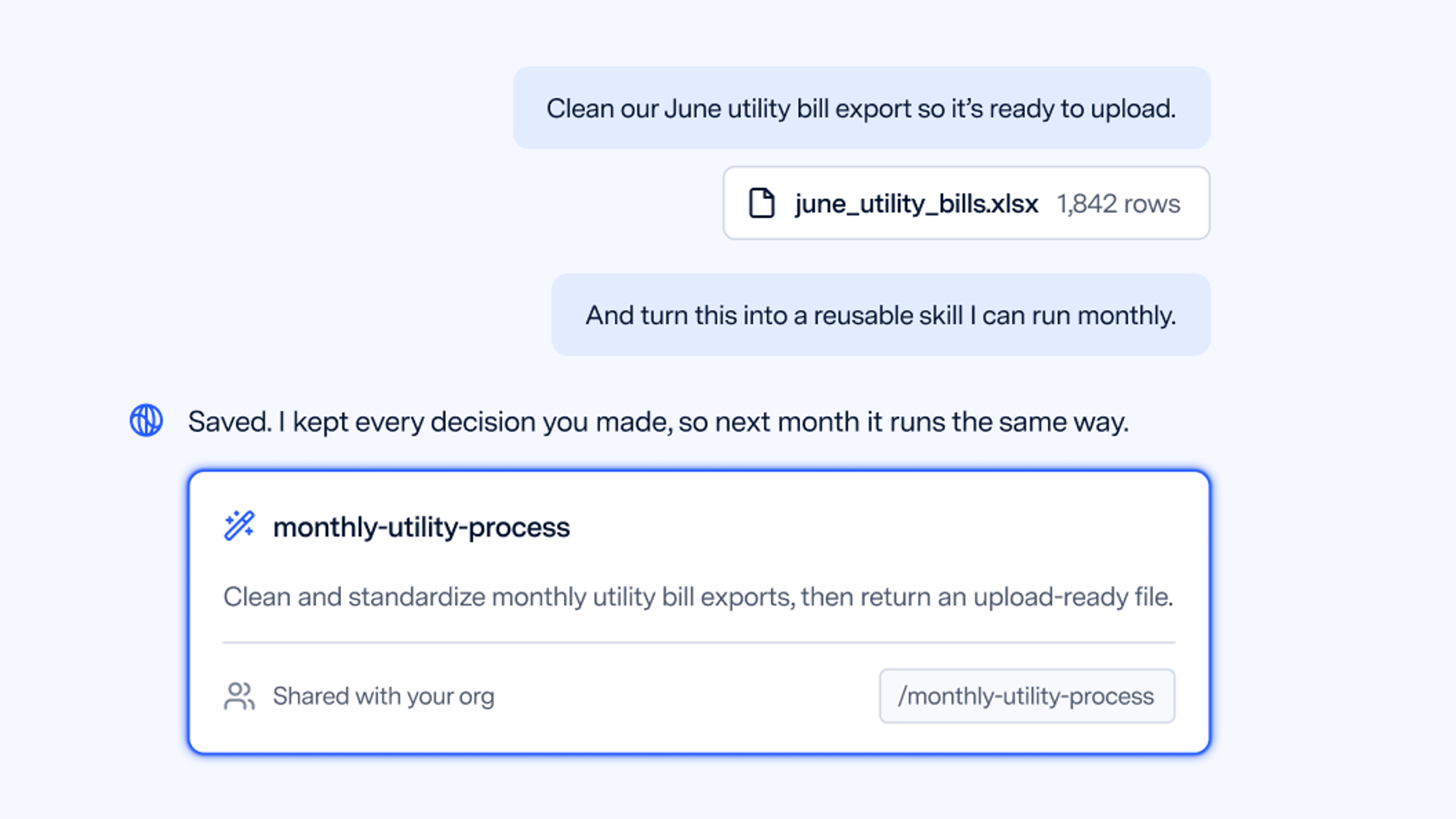
Create and share custom skills, tailored to your organizational structure and workflows.
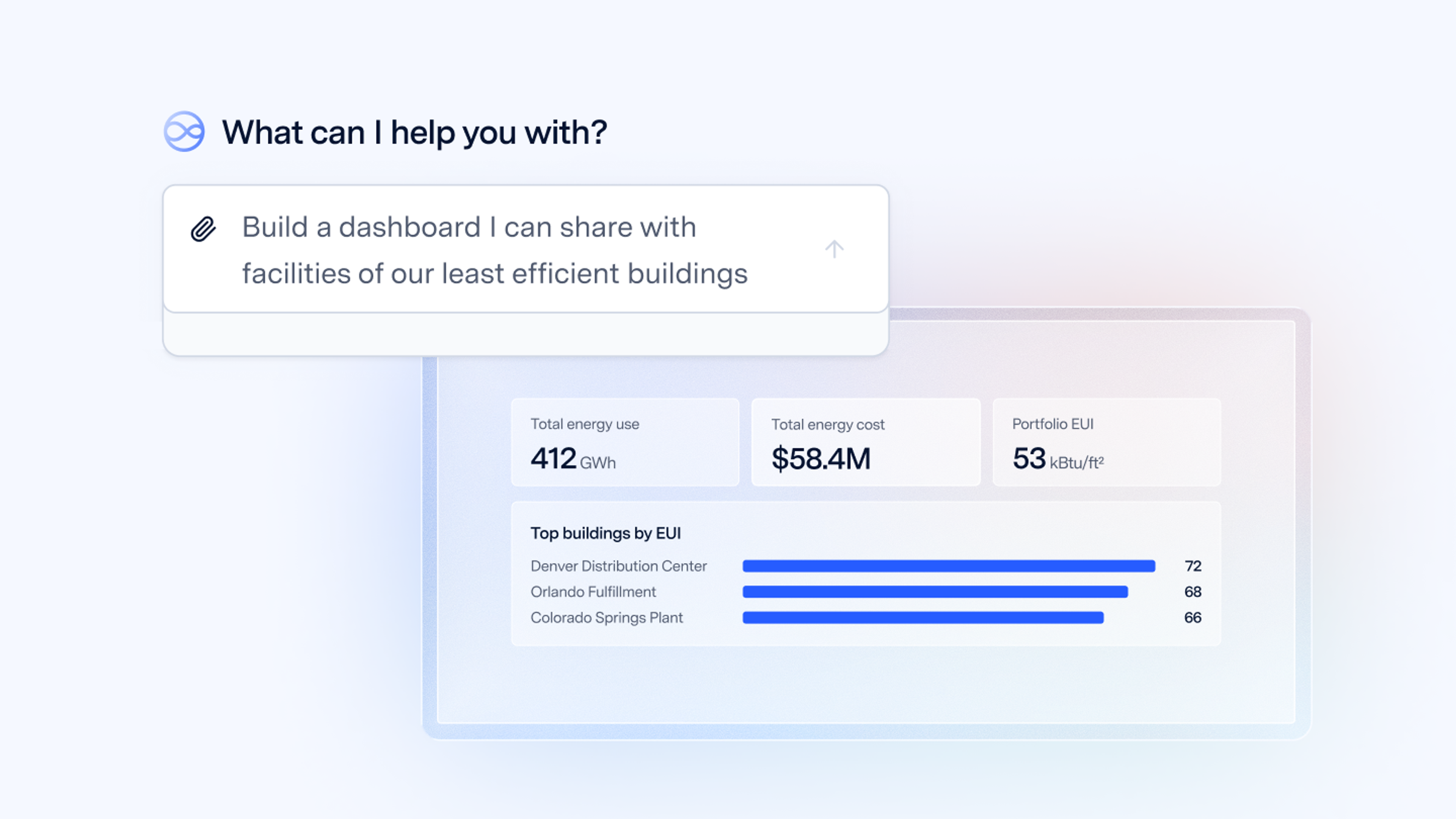
Build dashboards in moments that arm teams across your organization with data and insights
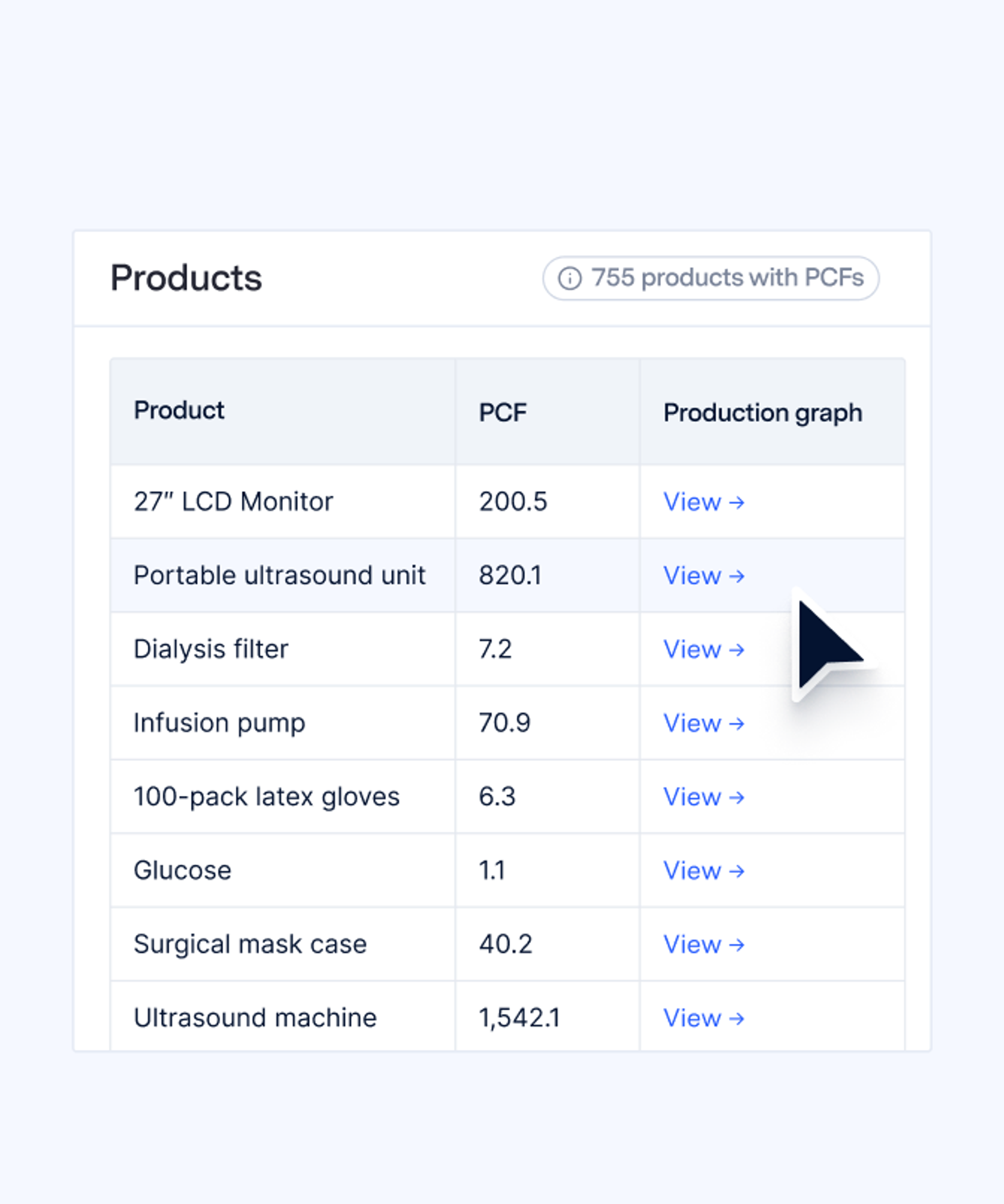
Create PCFs in moments that account for the nuance of every product and supply chain.
Learn how Watershed can help you meet your goals
Purpose-built tools to help sustainability teams move fast, without sacrificing data quality or control.
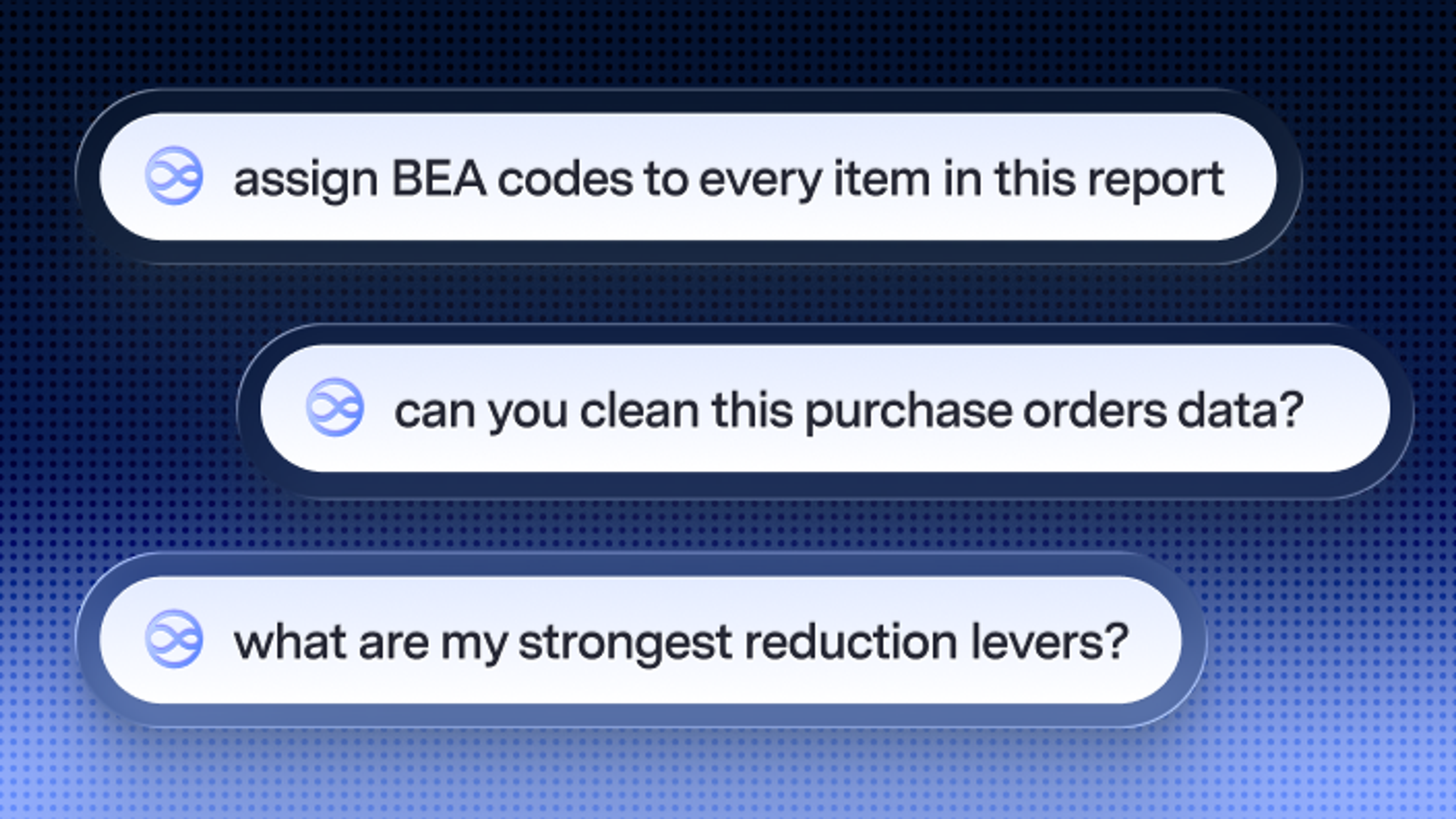
Delegate data cleaning, formatting, and analysis to purpose-built AI agents.
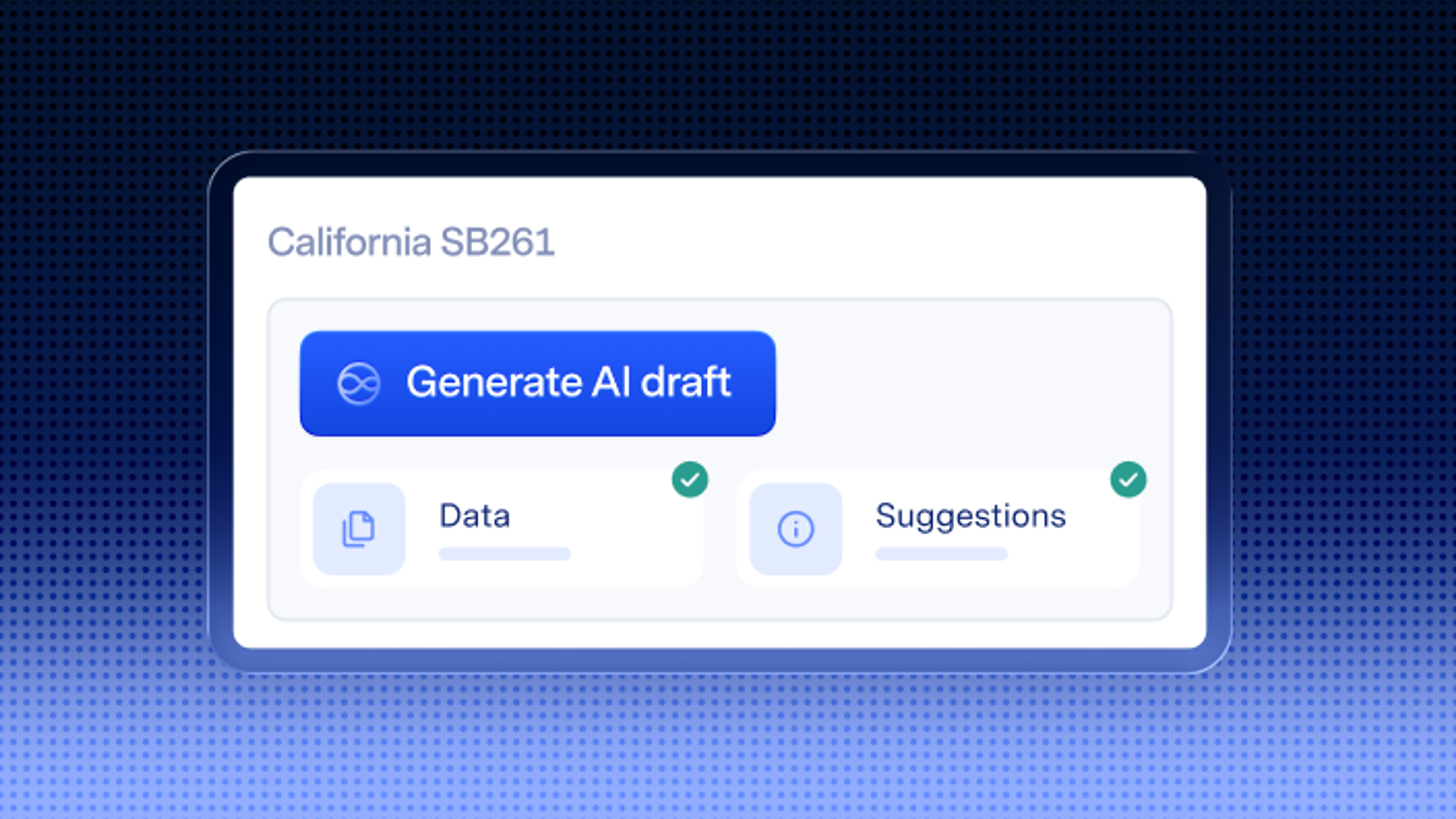
Draft reports using peer benchmarks and the most comprehensive climate databases.
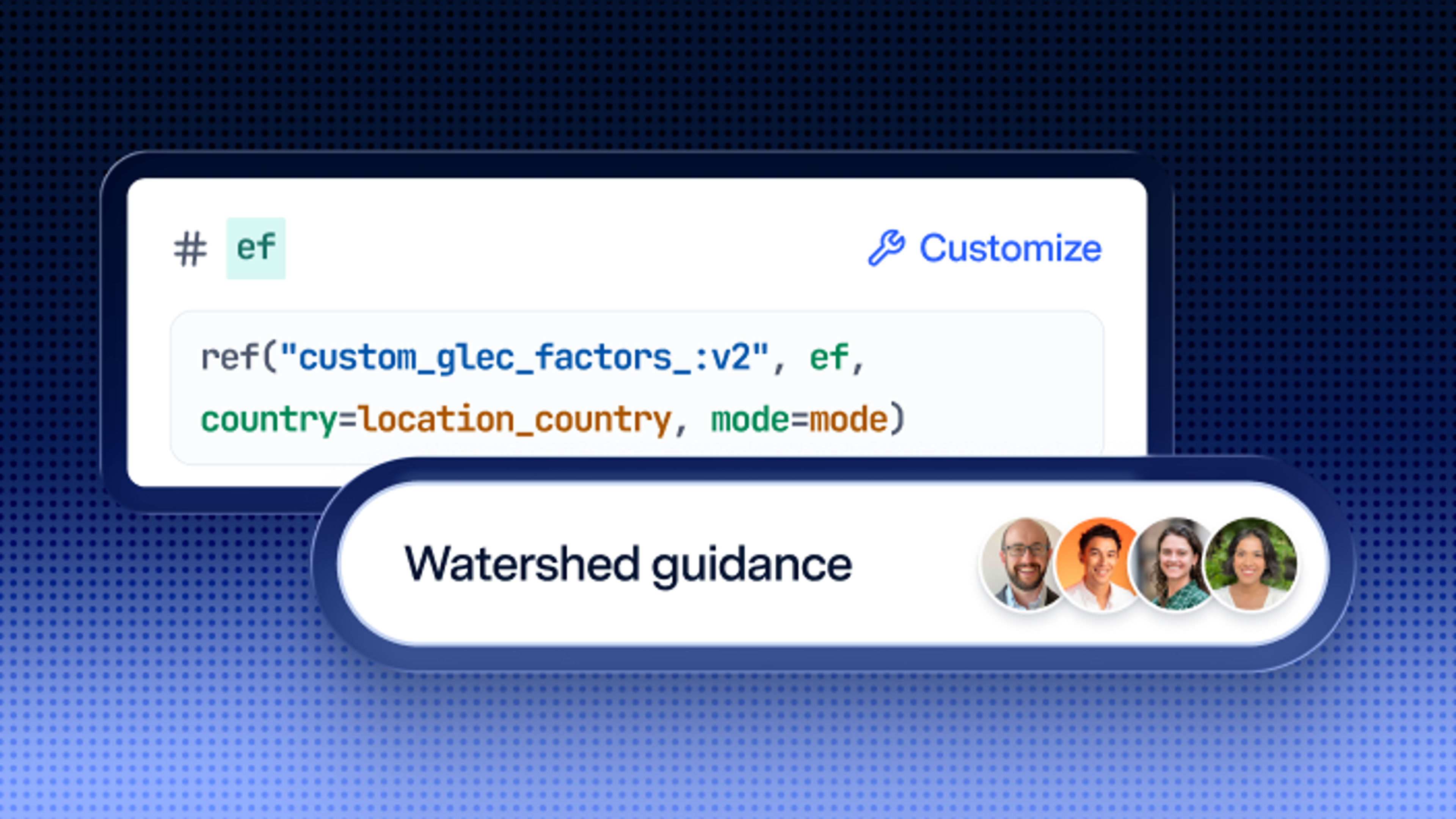
Get results you can trust with built-in human review and transparent calculations.
Before, the data process was incredibly manual and time-consuming. Now, with the agent, we’re able to take care of all those manual and time-consuming parts within one session. Gap filling, estimating, anomaly detection: all of that Watershed agents can do in a snap.

AI fellowship
The Watershed AI Fellowship is an accelerated program for sustainability professionals to go beyond the conceptual and work directly with Watershed's technical leadership to build, refine and document AI workflows for your company. Open to Watershed customers.
Science-backed, AI-accelerated
Watershed pioneered a sustainability-centered approach to deploying artificial intelligence. Our customers control their data, with transparency and governance at every step.
Based on decades of data and research from our science team.
Built with multiple agents to enforce accuracy and remove confirmation bias.
Trackable data points to understand the approach, every step of the way.
Review and refine inputs to make results accurate and actionable.
Scientists and AI engineers at Watershed publish research advancing the capabilities, performance benchmarks and reliability of sustainability AI.

ATLAS: A spend classification
benchmark for estimating scope 3 carbon emissions
Related Resource
How leading sustainability teams are driving business value with Watershed AI agents
In our use of AI, we optimize for performance and efficiency and regularly evaluate the field of technology options. We use various machine learning and generative AI techniques, from classical statistical methods like regression to recent models like LLMs, including Anthropic, OpenAI, and Google Gemini.

 Science-backed, AI-accelerated